🌈 Donate to DignityUSA's Advent Appeal | Give Now


The Cornerstone of Belonging: Faith, Identity, and the Reclaimed Vine


September 30, 2026
by
Bill Sive (he/him)
Sacred space is not confined within stone walls or institutional decrees. It blooms wherever love is lived out in truth.
October 4, 2026: Twenty-Seventh Sunday in Ordinary Time, Year A
Isaiah 5:1–7
Psalm 80:9, 1–16, 19–20
Philippians 4:6–9
Matthew 21:33–43
The Cornerstone of Belonging: Faith, Identity, and the Reclaimed Vine
A reflection by Bill Sive
As a gay elder, my life has been lived at the crossroads of deep Catholic faith and the vibrant reality of queer identity. Over six decades, I have watched the world transform, survived seasons of enforced silence, and eventually learned that visibility is not a vanity, but a ministry. To stand openly, without apology or bitterness, has become my sacred duty. Many who navigate the delicate integration of their sexuality, gender identity, and faith find themselves standing in a spiritual borderland. When inherited doctrines offer no solace and moral clarity seems out of reach, living beyond rigid spiritual guardrails becomes the only way to safeguard the soul. In that open air, I have grown into the role of a spiritual father, holding a lamp for those seeking to reconcile who they are with the God who made them.
When we open the Scriptures for the Twenty-Seventh Sunday in Ordinary Time, we are invited into the ancient image of the vineyard. In the prophecy of Isaiah, we hear of a beloved friend who spaded the earth, cleared away the stones, and planted the choicest vines, only to harvest wild, bitter grapes. Where justice (mishpat) was expected, there was a cry of distress.
How deeply this resonates with the lived experience of LGBTQIA+ Catholics. For generations, we have poured our devotion, artistic gifts, service, and love into institutional soil, only to receive judgment, rejection, or silence in return. The tragedy of spiritual alienation occurs when believers are forced to choose between the integrity of their God-given identity and their love for the Church.
Yet, in the Gospel of Matthew, Jesus turns this heartbreak upside down. Confronting the religious authorities of his day, he quotes the Psalmist: “The stone that the builders rejected has become the cornerstone; by the Lord has this been done, and it is wonderful in our eyes” (Mt 21:42).
As a spiritual father who has walked through the wilderness of rejection, I ask you to let those words settle into your bone marrow. In our spiritual family, the incarnation teaches us that grace builds upon nature, that our physical bodies, our capacity for intimate love, and our unique gender expressions are not obstacles to holiness, but the very terrain where God encounters us. To be rejected by human builders or rigid dogmatic structures does not mean you are discarded by the Divine.
In the paradoxical logic of the Gospel, God does not begin with the polished, compliant stones favored by institutional architects. God begins with the ones thrown into the dust. Your capacity to love authentically, your gender journey, your resilience, and the hard-won wisdom of your survival are not defects to be hidden. They are integral to the sanctuary God is constructing in our world today.
Living beyond traditional guardrails does not mean abandoning the moral life; rather, it demands a deeper, more intentional fidelity to Christ. It requires us to cultivate the inner peace that Saint Paul describes in his letter to the Philippians: “Have no anxiety at all, but in everything, by prayer and petition, with thanksgiving, make your requests known to God. Then the peace of God that surpasses all understanding will guard your hearts and your minds in Christ Jesus” (Phil 4:6–7).
Paul offers an exquisite compass for integrating faith and life: “Whatever is true, whatever is honorable, whatever is just, whatever is pure, whatever is lovely, whatever is gracious... think about these things” (8).
When you look at your own journey as an LGBTQIA+ person, look for these marks. Where you have shown true love, where you have stood for justice, where you have brought reconciliation or comfort to a suffering friend, there is the Spirit of God.
In our contemporary world, accelerated by rapid technology and digital noise, it is easy to become fragmented or isolated. Digital networks can amplify outrage and division, yet when guided by wisdom, these same platforms allow us to build global solidarity, offering sanctuary to young people isolated in hostile environments. As elders, our responsibility is to guide the next generation in using these tools not to multiply rancor, but to foster authentic community and extend compassionate service to those on the margins.
Sacred space is not confined within stone walls or institutional decrees. It blooms wherever love is lived out in truth. When you feed the hungry, comfort the wounded, affirm a struggling youth, or build a home rooted in fidelity and grace, you are yielding the rich harvest the Landowner desires.
To all who are seeking moral clarity and spiritual peace: do not fear the wide horizon beyond the fence. The peace of Christ is infinite. Embrace your identity with immense gratitude, walk with the quiet humility of a pilgrim, and devote your life to loving service. You are intentionally created, deeply loved, and fully seen by God. Step forward in confidence, knowing that the stone cast aside is holding up the house.
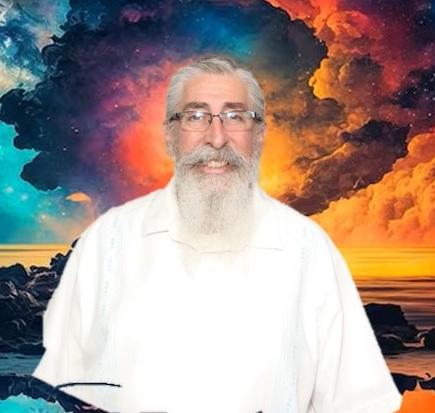
Bill Sive is a distinguished LGBTQ+ leader and advocate whose work has significantly impacted Southern California's LGBTQ+ community. As a long-standing member of the Gay Elder Circle, he foundationally bridges learnings from the past to the present through his writing and guest lectures. He has consistently worked to create safe spaces while bridging the intersection of social justice, spirituality, and advocacy. His expertise spans multiple domains, from serving on mental health committees and advisory boards to delivering presentations for the LGBT+ community and at major universities, public and private forums on LGBTQ+ aging, health disparities, history, and gender identity. Bill is actively involved in the Faith Based Advocacy Council (FBAC) of Los Angeles, National Interfaith Alliance, Faithful America, and the Green Faith California ensuring LGBTQ+ voices of faith are heard in these spaces.


