

Safe Within the Fold


April 22, 2026
by
Carter Fahey (he/him)
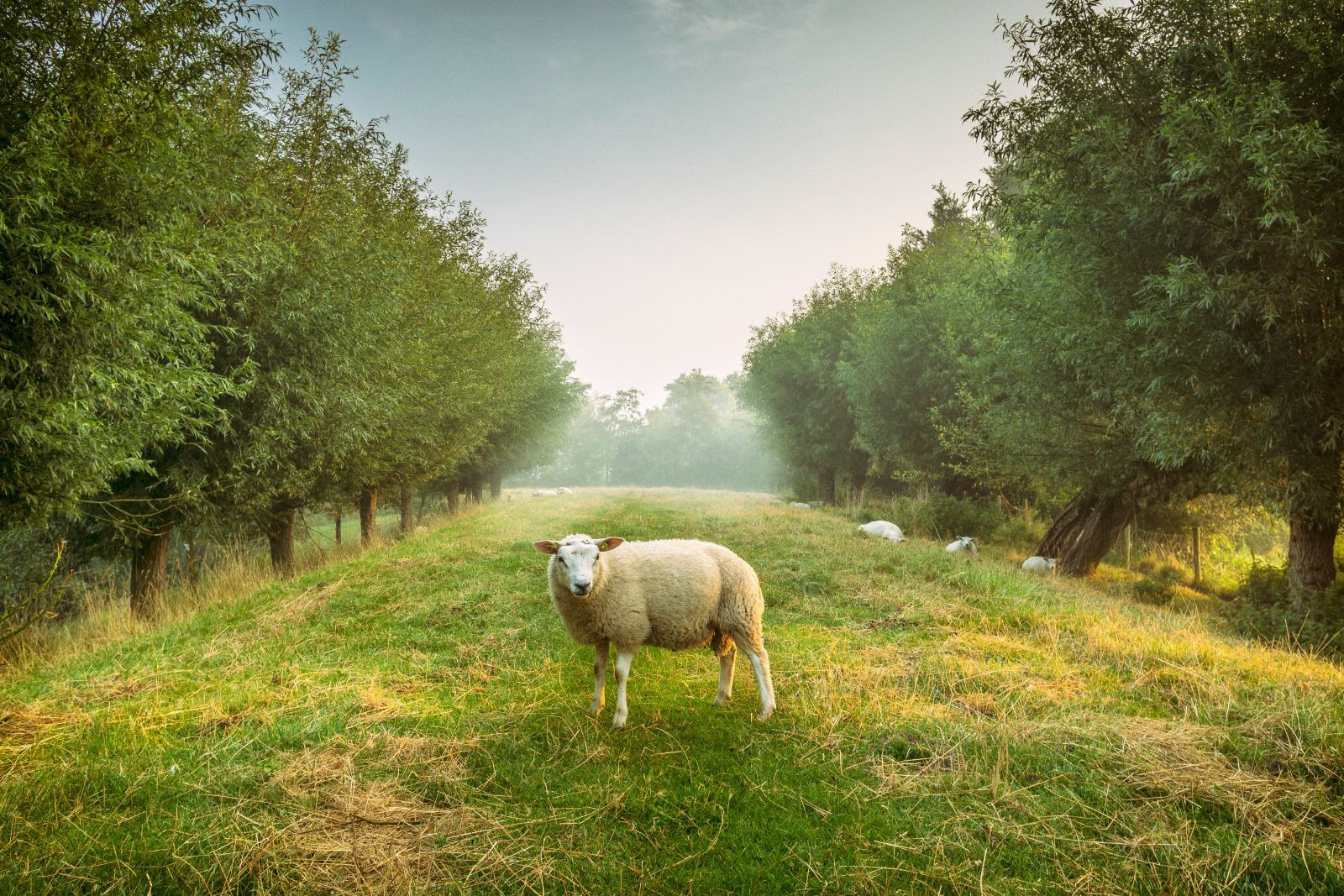
There’s more to being a shepherd than meets the eye. What can we learn about the Good Shepherd from the sheep pictured by his side?
April 26, 2026: Fourth Sunday of Easter, Year A
Acts 2:14a, 36–41
Psalm 23: 1–6
1 Peter 2:20b–25
John 10:1–10
Safe Within the Fold
A reflection by Carter Fahey
Today we hear about Christ the Good Shepherd, one of the most compelling images of Jesus in the Bible. It’s touched Christians for centuries, leading to countless works of art and music, and meriting references in books, poetry, and films. Bach’s cantatas Ich bin ein guter Hirt (BWV 85) and Du Hirte Israel, höre (BWV 104), for example, are based on the image, and early Christians were creating representations of the Good Shepherd from the very beginning of the Church, some of which can still be seen today in the Roman catacombs.
What about the sheep that are so often depicted alongside the shepherd, though? What can they tell us about the Good Shepherd himself?
Most of us don’t see many sheep in our day-to-day lives. Maybe we see some out the car window–a picturesque but fleeting pastoral scene. Perhaps we get the chance to see them at the county fair, or pet them at the petting zoo. Some might come across them on a walk in the countryside, lucky enough to see newborn lambs at play. The reality is that the vast majority of people encounter them only briefly and in very limited contexts; as a result, we often resort to stereotypical images.
These stereotypical sheep usually fall into one of two categories–the docile, peaceful, and cuddly lamb, or the timid, foolish and bumbling adult sheep. The first implies a certain innocence and fragility–a creature that needs protecting to survive, that can’t fend for itself in the real world. The second implies an inability to think for oneself (or at least an unwillingness), and an acceptance of the status quo even when it might be harmful. We can all think of times when sheep have been referenced in a derogatory context.
We’re missing a lot of context, though–there’s more to sheep than meets the eye! Anyone who has witnessed lambs playing would probably describe their romp as joyful. Wild sheep often live in harsh environments, and must have a great deal of strength and vigilance to survive. They are social creatures who form bonds within their flocks, and mourn the loss of lambs. Sheep express anger, protective instances, and attachment. They are much more than a silly animal, and to dismiss them as such diminishes the complexity of God’s creation.
Caring for these complex creatures requires a certain level of skill and knowledge. A good shepherd must care about their sheep, and know their patterns and routines, able to spot any subtle change in the flock that could indicate illness or disease. They must have an intimate knowledge of their environment, and any threat it might pose to the sheep. They should be ready to handle all the complexities that come with raising sheep: able to calm a panicked flock, drive them away from danger, coax them towards shelter, deal with a charging animal, and the thousands of unexpected struggles that come with caring for any living thing. Being a good shepherd is certainly no small feat.
How magnificent a feat, then, to be the Good Shepherd caring for the flock with such love and tenderness. How awe-inspiring to know that we have a Good Shepherd watching over all of us– overseeing our vast interconnected web of relationships, our complicated human natures, our squabbles and romances and joys and sadnesses! A Shepherd who knows each individual intimately and completely, who loves us each infinitely, and sees the path that’s best for us! If we only trust in Jesus’ voice when he calls us “by name and leads [us] out” and follow him down the right path, he will bring us to the restful waters and verdant pastures, giving us courage and guiding us even when we walk through the dark valley together, until we rest safely within the fold (John 10:3 and Ps 23:1–4).

Carter Fahey (he/him) is the Associate Editor of Breath of the Spirit and studied at Oxford. He is a convert and has an interest in doing outreach work to Catholic communities to combat misinformation and create opportunities for community among LGBTQIA+ people.

.svg)


.svg)
