

A Pinch of Salt


February 4, 2026
by
Justin Telthorst (he/him)
What does it mean to be the “salt of the earth?” In today’s reflection, Justin Telthorst explores the strangeness and complexity of a seemingly simple metaphor.
February 8, 2026: Fifth Sunday in Ordinary Time
Isaiah 58:7–10
Psalm 112:4–9
1 Corinthians 2:1–5
Matthew 5:13–16
A Pinch of Salt
A reflection by Justin Telthorst
Why would Jesus, who so often describes the Kingdom of God using metaphors drawn from gardening, farming, and growing things, choose salt as the image for who we are supposed to be?
That question kept bouncing around in my mind as I sat with this Gospel. We’re so familiar with the passage that we rarely pause to feel how odd the metaphor actually is. Salt isn’t obviously life-giving. In fact, salt can be destructive. Too much of it makes food inedible. Too much salt, spread on winter roads, poisons soil and waterways. And salt, while necessary, isn’t the stuff of life. It enhances, preserves, and sharpens, but it is not substance.
And maybe that’s the point.
We as Christians are not meant to be everything. We are part of something larger. Necessary, yes. Central at times, maybe. But we are not the whole.
The irony of this metaphor sharpens when you remember what people in Jesus’ time already knew. They lived with the contrast between the Sea of Galilee and the Dead Sea. One teeming with life, the other saturated with salt and largely lifeless. Too much of a good thing had turned something meant to sustain into something incapable of giving life at all. This contrast would have been familiar to Jesus’ listeners. And yet Jesus does not treat this reality as a threat to be avoided.
We might expect him to say, “Use salt carefully,” or “Add salt when appropriate.” Instead, he says, “You are the salt of the earth.” Not you will be. Not when you’re ready. Not once you’ve cleaned yourself up or reached a certain level of spiritual maturity. You are.
That already-ness matters. Jesus often speaks this way, and it makes many Christians uncomfortable. He doesn’t lead with achievement, striving, or earning. He begins with gift. With dignity. With belonging. We don’t become salt by doing the right things long enough. We are named as salt first.
But Jesus doesn’t stop there. He immediately introduces the possibility that salt can lose its saltiness. And that’s where the metaphor begins to puzzle us. I’ve never pulled the salt out of my cupboard, however old that cardboard container might be, and discovered that it had somehow become tasteless.
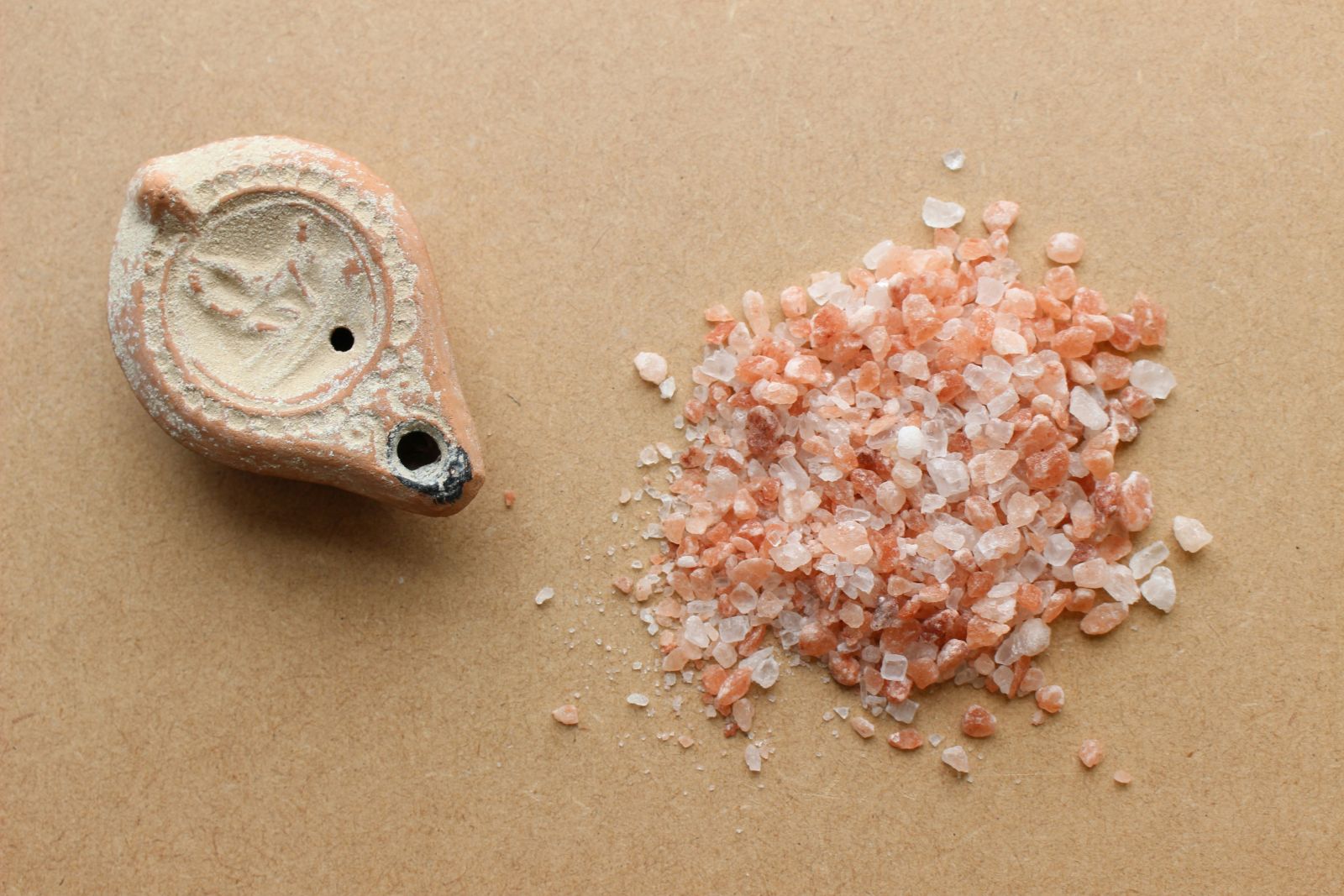
The salt harvested around the Dead Sea in Jesus’ time wasn’t the refined, purified salt we’re familiar with today. It was a mixture of salt combined with other minerals, and in the region's humid climate, the salt itself could gradually leach away through moisture, leaving behind something that looked like salt, came from salt, but no longer had any saltiness. What remained could be spread on paths or rooftops and trampled underfoot, but it wasn’t good for much else.
Perhaps this metaphor just became unsettling.
The word the gospel writer uses when Jesus speaks of salt “losing” its flavor doesn’t mean misplacing something, like losing your keys. A common usage at the time referred to a loss of discernment, an inability to judge or reason well. Not a loss through aging or intellectual decline, but a dulling. A loss through neglect, lack of practice, or failure to act in accordance with one’s purpose.
That distinction matters. This isn’t about moral collapse or God revoking dignity. It’s about failing to live in alignment with who we fundamentally are. It’s about becoming disconnected from the source that gives us life, wisdom, and direction.
Seen this way, the metaphor fits seamlessly with so much of Jesus’ teaching. He speaks again and again about daily dependence on God. Manna in the desert that couldn’t be stored up. Daily bread as something we ask for each morning. Faith is not meant to be stockpiled or automated. Salt only works when it’s used, renewed, and kept connected to its purpose.
Because salt isn’t meant to draw attention to itself. You don’t sit down at a meal and marvel at the salt. You notice what the salt brings out. Salt disappears into the dish. It gives itself away so that something else can be more fully what it is.
The second metaphor Jesus uses in this Gospel works the same way. Light doesn’t exist for its own sake. You don’t stare at a lamp and admire it. Light reveals what is already there. It doesn’t replace the room. It doesn’t become the furniture. It allows you to see.
Salt and light are not the substance of life. They are not the full answer, but they are an essential part of an ecosystem of flourishing. Too little, and things fall flat. Too much, and things die.
This feels like an important word for the Church right now. We are salt. We are light. And those are essential gifts. But salt alone is not food. Light alone is not life. When we forget that, when we try to be everything, when we oversaturate or overwhelm, we don’t bring more life. We risk killing the very things we claim to love.
What Jesus seems to invite us into instead is a rhythm. A way of living marked by movement and return. Going out into the world to be, to do, to participate, and then returning again to the source.
Not self-reliance, but relationship.
Not dominance, but participation.
May we live as the salt of the earth, preserving, purifying, and sharpening.
May we live as the light of the world, revealing, warming, and guiding.
And may we live knowing that we are not the Source. We are not the Divine. But that our presence, rooted in a relationship with the One who is, is exactly what this world so desperately needs.

Justin Telthorst is a speaker, writer, and content creator who is passionate about LGBT+ and Catholic dialogue. He has over a decade of experience navigating Church ministry, including five years as a missionary with FOCUS. Drawing from his rich background in philosophy, theology, and psychology, he offers a thoughtful and compassionate approach to the pastoral care and inclusion of LGBT+ Catholics, rooted in years of deep formation and pastoral experience. He is dedicated to fostering community among LGBT+ Catholics and making the Church a safe and welcoming place for all. When not working as a nurse, the Colorado-based advocate enjoys hiking and trail running. You can find his work at Empty Chairs.

.svg)


.svg)
